A bloom is that frilly, cauliflower-shaped mark with a hard, darker edge that appears in a wash as it dries. Painters also call them cauliflowers or backruns. Almost everyone meets one on their first sky, and almost everyone assumes they did something mysterious wrong.
It isn't mysterious. A bloom happens for one reason: wetter paint met paint that was already starting to dry. Once you can see that moment coming, you can avoid blooms most of the time, and use them on purpose when you want to.
New to painting coloring pages? Start with my step-by-step guide on how to watercolor a coloring page, then come back to this one.
What actually happens
As a wash dries, the paper goes from shiny wet, to a satin sheen, to dull. If you touch a drying area with a brush that's wetter than the paper, the extra water rushes out from the brush into the half-dry wash. It pushes pigment ahead of it, and when it stops, that pigment piles up in a ragged ring. The ring dries darker and harder than the rest. That's the bloom.


The one rule
Only add paint that's drier than the paper, or wait until the paper is completely dry.
- While the wash is still evenly glossy, you can drop in more color freely. It blends.
- Once it reaches the satin stage, only add color with a brush that's damp, not wet, and use a thicker mix. Better still, stop.
- When it's bone dry, you can paint over it again without any risk of a bloom.
That middle stage is where nearly all of my blooms have come from. I'd see a pale spot in a sky just as the shine was going, decide to fix it "quickly", and touch in a loaded brush. Within a few seconds a frilly ring would open up right in the middle of the sky. These days, if the shine has gone, I put the brush down. A pale patch can be glazed later; a bloom can't be taken back out.
Other common causes
A puddle left at the bottom of a wash. If a bead of paint sits along the bottom edge as the rest dries, it creeps back up into the drying area. Pick it up with a squeezed-dry brush when you finish the wash. Flat and Graded Washes shows how.
Painting next to a wet area. A wet roof touching a half-dry sky will bloom along the line where they meet. Skip around the page so neighboring areas never touch while one is drying.
Uneven drying. Wet paper dries from the edges inward, and a corner where water pooled stays wet longest. Tilting the board slightly and blotting pools with the corner of a paper towel keeps the drying even.
A drip from the brush. A heavy drop falling onto a drying wash is a bloom waiting to happen. Touch your loaded brush to the rim of the palette before it goes near the page.
How to fix a bloom
Don't touch it while it's wet; you'll only make it bigger. Let it dry completely, then choose one of these:
- Soften the edge. Run a clean, damp brush along the hard rim a few times, then blot with a tissue. The ring becomes much less noticeable. Lifting and Softening Watercolor covers the technique.
- Glaze over it. A thin, transparent layer of the same color over the whole area evens out the difference. Paint it in one quick pass.
- Turn it into something. In a sky, a bloom can become a cloud. In a hedge, a bush. On a hillside, a patch of heather. Add a few small strokes and it looks planned.

When blooms are a good thing
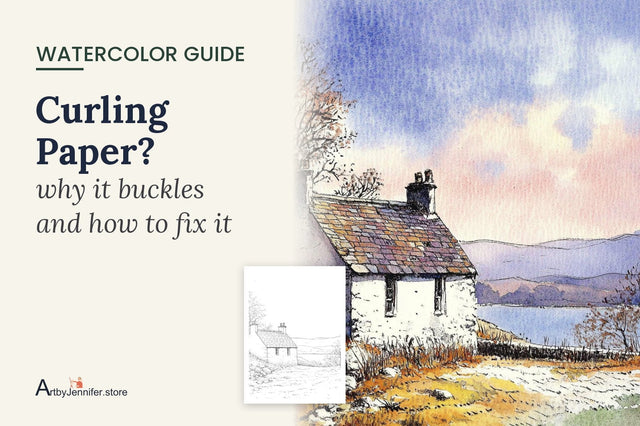
Blooms aren't always mistakes. On a wild moor, a stormy sky or rough water, a few of them add texture you couldn't paint on purpose. On the moorland cottage below, the loose, uneven orange of the moor is part of what makes it look windswept.


Flowers can benefit too. When a petal dries with a slightly darker rim, it outlines the petal without any extra work, as on the sunny yellow daisy.

If you'd like to make one on purpose: lay a wash, wait for the satin stage, then touch a drop of clean water or a wetter mix into it and leave it alone.
Quick checklist
| What you see | Why it happens | What to try |
|---|---|---|
| Frilly ring in the middle of a wash | Wet brush touched a half-dry area | Stop once the shine fades; wait until fully dry |
| Bloom along the bottom edge | Bead of paint crept back up | Lift the last bead with a squeezed-dry brush |
| Bloom where two colors meet | One area wet, the other drying | Skip around; let neighbors dry first |
| Bloom in one corner | Water pooled and dried last | Tilt the board slightly; blot pools |
| Round spot in a dry-looking area | A drip from the brush | Touch the brush to the palette rim first |
Frequently asked questions
What causes cauliflowers in watercolor?
Wetter paint or water added to a wash that has started to dry. The extra water pushes pigment outward and it dries in a hard, frilly ring.
How do I fix a bloom in watercolor?
Let it dry fully, then soften its edge with a damp brush and blot, glaze a thin layer of the same color over the area, or turn it into a cloud, bush or texture.
Does paper affect blooms?
Yes. Cotton paper stays wet longer and more evenly, so you have more time before the satin stage. Cellulose paper and cardstock dry faster and unevenly, so blooms happen more easily. Watercolor Paper Explained compares them.
Practice pages
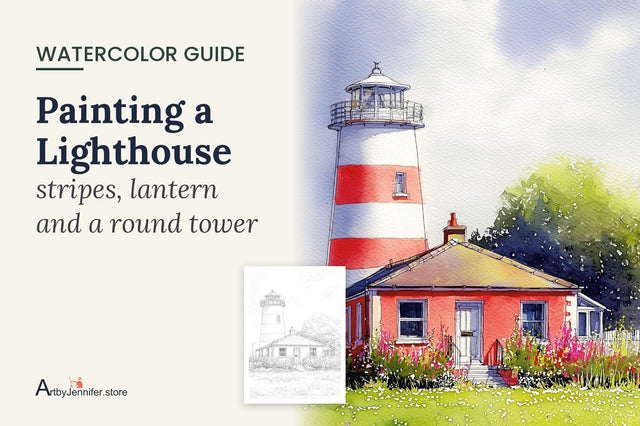
Big skies are the best place to learn the timing. The 29 Simple Lighthouses set has plenty of them, each with a color guide, and How to Paint Watercolor Skies and Sea walks through one from start to finish.