Cats are all about the stripes and the eyes. The fur underneath can be one soft, warm wash; it's the tapered stripes on top and a glint in each eye that make a cat look like a cat, and like your cat.
The stripes are where I went wrong for a long time. I was so keen to see them that I painted them into the fur while it was still damp, and every stripe spread into a soft orange blur. A tabby with blurry stripes just looks like a slightly muddy ginger cat. The fix is patience: fur first, let it dry, stripes last.

New to painting coloring pages? Start with my step-by-step guide on how to watercolor a coloring page, then come back to this one.
The order that works for cats
- Whites first, in your head. Find the white muzzle, chest and paws, the whiskers and the glint in each eye. They stay as paper.
- One soft fur wash. The lightest fur color over the whole cat, with a warmer or darker color dropped in while it's damp.
- Let it dry completely.
- Stripes and markings on dry paper, so they keep their shape.
- Eyes, nose and background last.
Tabby stripes that taper
Real stripes are thicker in the middle and fade to a point at both ends. To get that, start each stripe with the tip of the brush, press a little as you go, then lift off the paper as you finish, the same press-and-lift stroke from Watercolor Brush Control. The color guide's tip says it well: stripes look more natural if you lift your brush at the end of each stroke so the line tapers.
Two more things help. Follow the way the fur grows, so stripes curve around the body and the head rather than running straight across. And vary them: some longer, some shorter, a few broken in the middle. Evenly spaced stripes look like a barcode.
Whiskers: paint around them
Whiskers are white against darker fur, so the cleanest way is to leave them as paper. On a coloring page the lines are already printed; just paint the fur up to each whisker and stop. If one disappears under the paint, a fine line of white gel pen or white gouache at the very end will bring it back. Keep them thin and slightly curved, and don't add more than the page shows.
Eyes that glow
Cat eyes look lit from inside because they're bright and clean. Paint the iris in one pass with a clear gold, green or blue, leave a small white glint, and add the dark pupil once the iris is dry so it stays crisp. A thin darker ring around the edge of the iris makes the color glow even more.
How I painted the sleepy orange tabby

- Base fur: a wash of raw sienna over the whole cat, leaving the paws and muzzle white.
- Warm fur: cadmium orange dropped onto the back and head while the first wash was still damp.
- Stripes: once it was dry, burnt sienna in short, tapered strokes following the direction of the fur.
- Blanket, eyes and nose: the blanket in ultramarine with dioxazine violet in the folds, then quinacridone gold eyes and a quinacridone rose nose.
The cool blue blanket is doing a lot of work here. It sits right next to all that warm orange fur and makes it glow, the same warm-against-cool idea from Warm and Cool Light.

Painting your own cat's colors
- Ginger: raw sienna and cadmium orange, with burnt sienna stripes.
- Gray tabby: a pale blue-gray wash, with stripes in a deeper mix of ultramarine and burnt sienna.
- Black: a strong blue-gray rather than flat black, with the light side of the head left noticeably paler so the shape still shows.
- Tortoiseshell: patches of burnt sienna, orange and dark blue-gray dropped into a damp wash so they melt into each other at the edges.
- White: mostly paper, with soft blue-gray shadows under the chin and around the ears.
Common problems
| What you see | Why it happens | What to try |
|---|---|---|
| Stripes are blurry | Painted while the fur was still damp | Let the fur dry completely first |
| Stripes look like a barcode | Even, straight, same-length strokes | Taper them, curve them with the fur, vary the length |
| Whiskers disappeared | Painted over | Paint around them, or add white gel pen at the end |
| Eyes look dull | Iris overworked or pupil painted wet | One clean pass for the iris; pupil once it's dry |
| Fur looks flat | One even color | Drop a warmer or darker color into the damp first wash |
Frequently asked questions
How do you paint tabby stripes in watercolor?
Wait until the fur wash is completely dry, then paint each stripe with a press-and-lift stroke that starts thin, swells a little and tapers off, following the direction of the fur.
How do I paint white whiskers in watercolor?
Leave them as white paper by painting the fur around them. If you lose one, add it back at the end with a fine white gel pen or white gouache.
What colors do I need for a ginger cat?
Raw sienna for the base fur, cadmium orange for the warmer areas and burnt sienna for the stripes.
Practice pages
The 15 Cute Cats set has tabbies, tuxedos, torties, gray cats and gingers, each with a painted version and its own color guide.
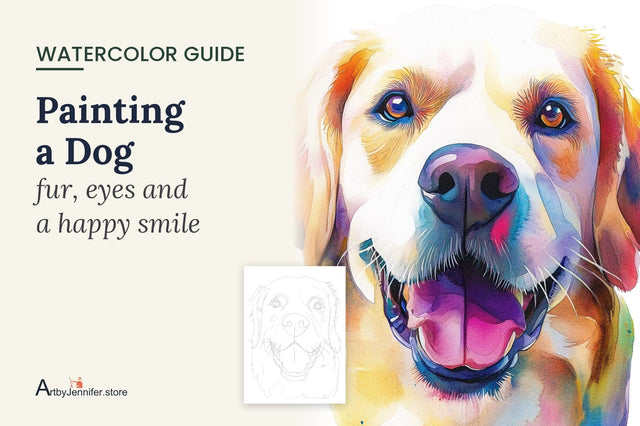
Painting a dog next? Their fur, noses and smiles have their own tricks, covered in How to Paint a Dog in Watercolor.