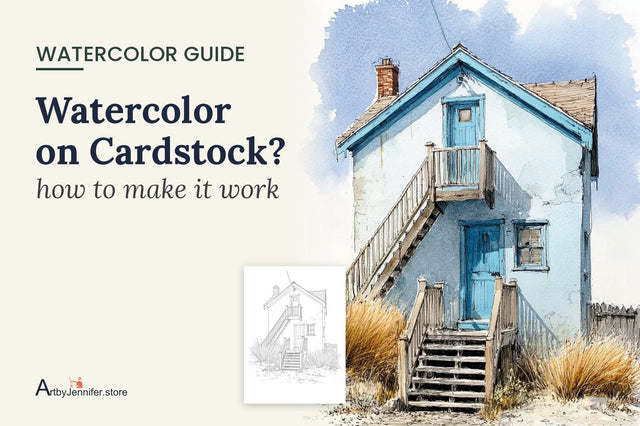
It is never too late to start watercolor. Many of my customers picked up a brush for the first time with my pages, and you don't need to be "good at art" to enjoy it. Whether you've just retired, painted years ago and want to come back to it, or have simply always wondered, this is a lovely time to begin.
Watercolor is a wonderful medium to start with at any age. It needs very little equipment, it cleans up with water, and you can do it at the kitchen table. This guide is about making it comfortable: easier to see, easier to hold, and easier to finish, so the hour you spend painting is a pleasant one.

New to painting coloring pages? Start with my step-by-step guide on how to watercolor a coloring page, then come back to this one.
Start with a printed page, not a blank one
The hardest part of watercolor for most beginners isn't the paint. It's the drawing. Getting a house's roof at the right angle, or a window in the right place, can take years of practice, and it's where many people give up.
A printed line drawing takes that part away. The shapes are already there, so you can spend all your attention on the enjoyable part: color, water and watching the paint move. That's exactly why I paint every design in my sets myself and include a color guide with it. You see the finished painting, you see which paints I used and in what order, and then you paint your own.
If you've never painted before, choose a simple subject with big shapes: a house with plain walls, a single flower, a lighthouse on the rocks. Leave the busy scenes with lots of tiny flowers for later.
Make it easier to see
Print larger if you can. My pages print on US Letter or A4 with "Fit to page." If you'd like bigger shapes, a local print shop can print the same file on larger paper, such as 11 x 17 inches, and "Fit to page" scales the drawing up with it. Bigger shapes mean bigger areas to fill and fewer fiddly corners.
Good light from the side. Sit near a window or put a lamp on the side opposite your painting hand, so your hand doesn't throw a shadow over the page. A daylight bulb makes colors easier to judge in the evening.
Read the guide on a screen, print only the drawing. The finished painting and the color guide are easiest to see on a tablet or computer, where you can zoom in. You only need to print the line drawing. Each color guide page tells you which page number to print.

Make it easier to hold
Choose a thicker brush handle. Thin brush handles can be tiring to grip, especially with stiff or sore fingers. Many art stores sell brushes with chunkier handles, and you can also slide a short piece of foam tubing (sold as a pencil grip) over a handle you already own.
Use a bigger brush than you think. A size 8 or 10 round brush with a good point can paint large walls and, with just its tip, fairly small details. One good brush is easier than juggling five small ones.
Tape the page down. A few pieces of masking tape at the corners, onto a board or a tray, keep the page from sliding and buckling. Tilt the board slightly toward you so you don't have to lean over it.
Rest your hand. If your hand isn't as steady as it used to be, rest the side of your hand or your little finger on the table, or on a folded paper towel, while you paint. It steadies the brush a great deal. And choose loose, forgiving subjects: grass, sky, flowers and old stone all look better when they aren't perfectly neat.

Keep the supplies simple
You don't need a big set. A small set of student or artist watercolors, one or two round brushes, two jars of water (one for rinsing, one kept clean), a paper towel and some watercolor paper are enough to start. Watercolor Coloring Supplies for Beginners lists exactly what I'd buy first.
For paper, watercolor or mixed-media paper of 90 lb (200 gsm) or heavier holds water best. If you print at home on an inkjet printer, let the page dry for about an hour before painting, and start with light washes so the printed lines don't run. Thick cardstock works for lighter painting too; Can You Watercolor on Cardstock? explains how.
If a wet brush feels like too much at first, watercolor pencils are a gentle in-between. You color like a normal pencil, then go over it with a damp brush. Watercolor Pencils vs Paint compares the two.
Your first page, step by step
Here is the white cottage from the top of this post, painted in five short steps. It uses only four colors.

- Walls: leave them as white paper. If you like, add a very pale blue shadow down one side once everything else is done.
- Roof: cadmium orange, a little darker just under the edge of the roof.
- Door and shutters: cerulean blue. These are small shapes, so take them one at a time and rest in between.
- Fence: a light wash is plenty. Let the printed lines show.
- Lawn: one loose sap green wash across the bottom.
That's a finished painting. Many people are surprised how little paint it takes.
When you're ready for a second page, the green roof bungalow is another gentle one: yellow ochre walls, a sap green roof, viridian door and shutters, and a warm golden sky.

The tip on that color guide is a good one for any first page: mix plenty of paint before you start a wall, so you don't run out halfway and have to mix a second batch that doesn't quite match.
Short sessions, often
You don't need to finish a page in one sitting. Watercolor actually likes breaks, because each layer needs to dry before the next one. Paint the walls, put the kettle on, come back and paint the roof. Thirty or forty minutes at a time is plenty, and stopping while it's still enjoyable is what makes you want to come back tomorrow.
If something goes wrong, it can usually wait. A blotch or a run often looks fine once it's dry, and many small mistakes can be softened with a damp brush and a tissue. Lifting and Softening shows how.
Painting together
Coloring pages also work well as a shared activity: with a grandchild, a friend, or a group at a community center or a care home. Everyone can paint the same page and compare, or each person can choose their own. Since the drawing is already done, painters of very different experience can sit at the same table and all finish something they're proud of. A finished page also makes a lovely handmade card or gift; there are ideas in Gifts for Watercolor Painters.
Frequently asked questions
Is watercolor good for seniors who have never painted?
Yes. It needs few supplies, cleans up with water and can be done sitting at a table. Starting on a printed line drawing removes the hardest part, the drawing, so you can enjoy the color straight away.
What is the easiest watercolor subject for a beginner?
A simple house with plain walls, a single flower or a lighthouse on the rocks. Big shapes, few small details and plenty of white paper.
What if my hands shake or are stiff?
Use a brush with a thicker handle or a foam grip, rest the side of your hand on the table while you paint, and choose loose subjects like sky, grass and flowers that don't need perfect edges. Watercolor pencils are another option.
How long should a painting session be?
Whatever feels comfortable. Thirty to forty minutes is a good start, and watercolor's drying time gives you natural breaks between steps.
Practice pages
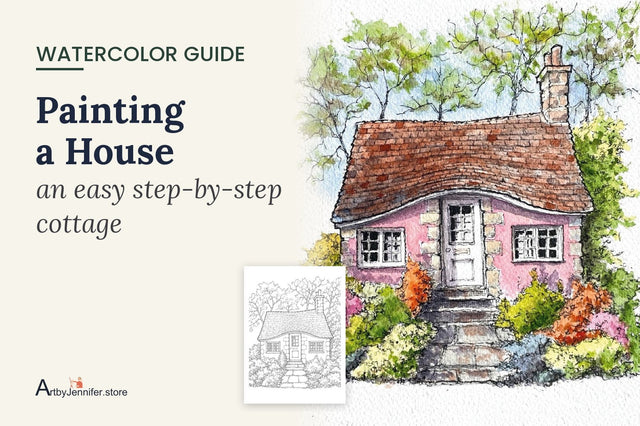
Both cottages in this post come from 84 Simple Houses for Watercolor Beginners, which I made with first-time painters in mind: big shapes, simple colors and a color guide for every house. If you'd like to try before you buy, my 8 free watercolor coloring pages are a good place to start.